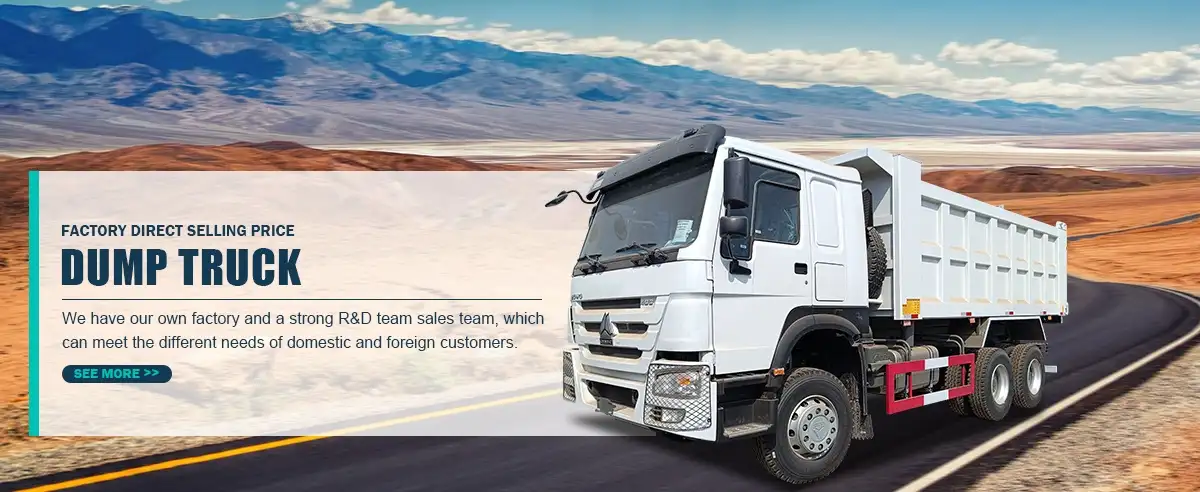
 What are the core upgrade contents and core functions of the new version dump truck
In recent years, mainstream brands in the industry have focused on user pain points and policy guidance, continuously promoting the iteration and upgrading of dump trucks, launching multiple new versions of models, achieving comprehensive breakthroughs in power and energy, intelligent control, safety protection, structural optimization, and operation and maintenance management, further amplifying the core value of dump trucks, and adapting to the green, intelligent, and efficient needs of engineering transportation in the new era.
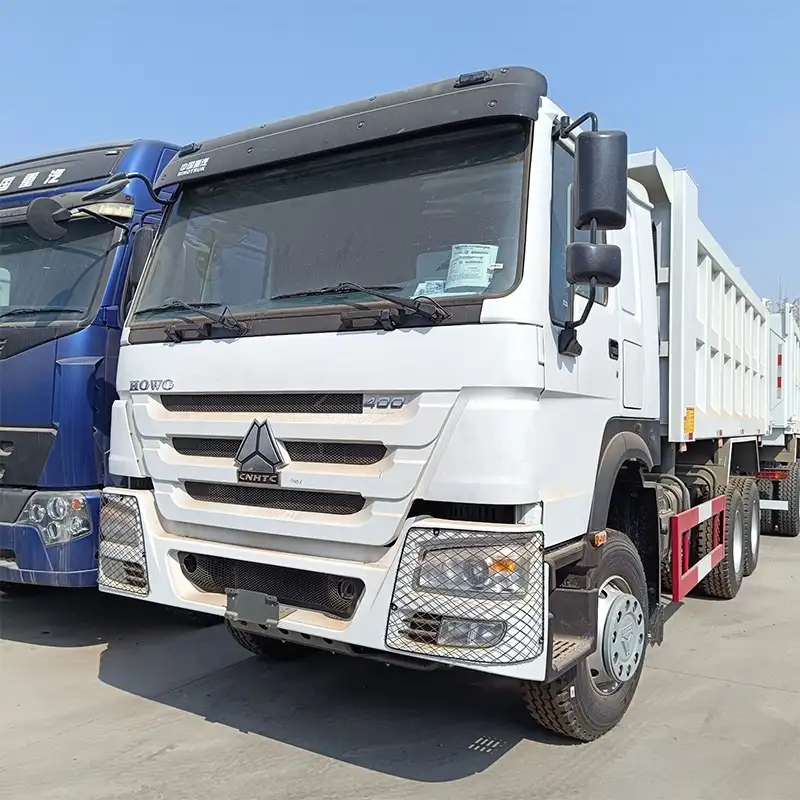
1.Comprehensive reform of power system: green and low-carbon, efficient and heavy-duty without compromise
The new version of dump trucks has fully entered the era of intelligence and networking, achieving a leapfrog upgrade from assisted driving to L4 level unmanned driving. It is equipped with multi-dimensional perception devices such as laser radar, high-definition cameras, and millimeter wave radar, combined with AI large model algorithms and high-precision positioning technology, to build a complete intelligent control system. Some high-end new models have achieved fully automated unmanned driving in closed scenarios (mines, ports, factories), with autonomous loading, driving, unloading, and obstacle avoidance functions. The takeover rate is less than 5%, and a single person can remotely control multiple vehicles; At the same time, it is equipped with an intelligent management platform for vehicle networking, which enables real-time monitoring of vehicle positioning, operating trajectory, working condition data, and energy consumption. It supports remote fault diagnosis, maintenance reminders, and job statistics. In addition, the domain control electrical architecture has completed a 3.0 upgrade, and the vehicle's wiring harness has been finely optimized. The waterproof, dustproof, and anti electromagnetic interference performance has been greatly improved, and it is suitable for high dust and high vibration environments in construction sites and mining areas. The failure rate of wiring harnesses has been reduced by 50%.
2.Comprehensive upgrade of safety protection: active and passive dual protection, more secure work
In response to the industry pain points of heavy-duty transportation, complex road conditions, large blind spots, and easy accidents of dump trucks, the new version of the vehicle comprehensively strengthens active and passive safety configurations, and creates a multi-level safety protection system. In terms of active safety, it is equipped with the industry's first hill descent 2.0 system, which increases the slope adaptation range from 10% to 14%. It automatically controls the speed when descending steep slopes, eliminating the need for frequent braking and avoiding brake overheating and failure; New features such as AEB automatic emergency braking, emergency braking in turning blind spots, anti throttle misoperation, and bucket restriction have been added, reducing the accident rate of rear end collisions and blind spot collisions by 90%, completely eliminating rollover and damage accidents caused by bucket driving and misoperation. In terms of passive safety, a high-strength collision resistant cab design is adopted, and the frame is upgraded to high-strength steel material with locally reinforced three-layer structure. The frame strength is increased by 13%, eliminating the risk of cracking under heavy loads of 100 tons; The cab is equipped with shock-absorbing seats and collision reinforcement devices to enhance the collision protection capabilities of drivers and passengers.
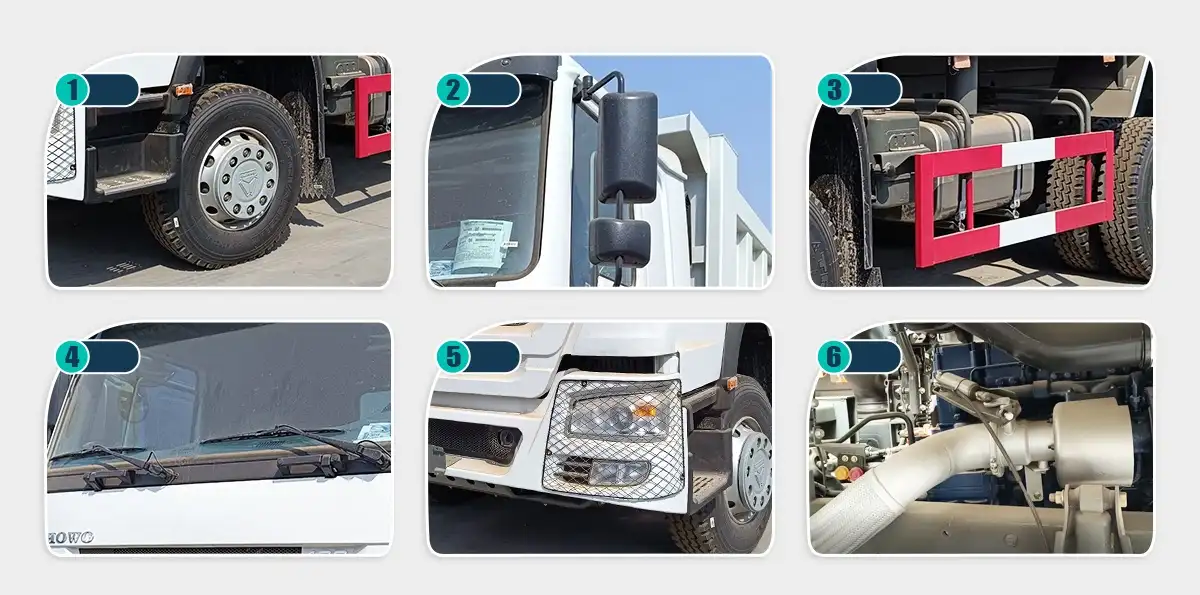
3.Iterative upgrade empowers the industry, further upgrading the value of dump trucks
With the iteration of intelligent technology, dump trucks are upgrading towards intelligent control, safety and efficiency, further expanding their application boundaries. In the future, dump trucks will continue to improve their performance through technological innovation, serve industrial development with professional capabilities, inject stronger impetus into accelerating engineering construction, upgrading logistics efficiency, and promoting green and low-carbon transformation, and become an important force in promoting economic construction and industry development.